International Day of Play campagin.
On the 11th June 2024 the world observed the first International Day of Play, which marked a significant milestone in international efforts to preserve, promote and prioritise playing. The day is designed to help ensure all people, especially children, are able to reap the rewards of playing and thrive to their full potential. It has long been acknowledged that play allows children to learn about the world around them, experiment with different ideas and develop a sense of curiosity. This helps children to develop language, problem solving and critical thinking skills. However, new research indicates that adult play, encompassing various activities, offers significant benefits formental and physical wellbeing, including stress reduction, improved mood, enhanced cognitive function and stronger social connections. While play may appear purely recreational, its significance extends well beyond mere enjoyment.
In the context of contemporary societal pressures, play is often overlooked as an unnecessary leisure activity, reminiscent of childhood pursuits. However, extensive research underscores the substantial advantages of play for adults, establishing it as an essential component for fostering wellbeing, creativity and resilience. Recognising and incorporating opportunities for play into daily routines should be regarded as a crucial aspect of a healthy lifestyle for all individuals. This practice can provide adults with transformative benefits for their mental, emotional and physical health.
The International Day of Play creates a unifying moment at global, national and local levels to elevate the importance of play. It signals a call for play to be integrated into education and community settings worldwide. To support this International Day charities and government bodies throughout the world are campaigning to raise awareness and are planning a wide range of international, regional and local events.
Goal setting - what i wanna develop in this campagin
The goals that I wanna develop through this campaign is to highlight how unsaturated adults and teens' lives can get after experiencing adulthood and hustle culture. This applies to all ages but my key focus is to highlight how i can show that kids and adults can interwine and also have fun within their respective ages and know how to keep a balance within their physical & mental health, which is a thing that a lot of people forget nowadays when they are too indulged with life matters, they don’t really get to experience a livelihood as they did when they were kids and i feel like it's important to showcase that matter so people are more aware of how fundamental the international day of play is and how it benefits you as we all know how detrimental your mental health can get whilst you’re growing up. My main goal is to spread awareness about this cause and try to make a difference in today’s world by emphasizing what the international day of play plays into individual’s lives and daily routines. One of my other goals is to make clear and stable shots so the documentary can feel / look professional as camerawork is something I really want to touch on especially with my directorial intent. I want to also use clean cuts for interviews (this is a maybe), adding titles for people’s names and or a short opening title for the documentary.

Mind map
Primary research on 'PLAY'

Secondary research on 'PLAY'
This is what i found out about the participants when it came to play.
Students aged 16-18 said: Friends + Family + Enjoyment 56.3%
Practical (baking, sports) 15.6%
Entertainment 6.3%
Sleep 3.1%
Games 15.6%
Acting 3.1%
Whereas students aged 11-13 said:
Friends + Family + Enjoyment 78.6%
Sports 7.1%
Video games 14.3%
I believe that there is a significant variation in the definition of play due to differences in maturity and age. Children cherish family and everything about it, but students between the ages of 16 and 18 reported that they enjoyed hanging out with their friends and taking part in more useful or entertaining activities to keep them going throughout the day, which was really helpful to me. My perspective has only grown clearer as an outcome of my studies, so I now have a better understanding of what people of all ages might consider when it comes to playing or enjoying life. enforcing good mental health routines. Obviously, as the time comes i will be updating my primary research analytics and have more ideal results but for now. This is more than enough for me to start the documentary / social media campaign.
During the course of my secondary research i found a lot of interesting things about the philosophy of play and what that means for children + adults in modern day society. These research papers + youtube videos have helped me gain a clear understanding when it comes to play and educating myself on why adults, young adults lose themselves as they grow up which is why the international day of play was established. These are all the resources that i searched for in hopes of getting an answer.
Gindi, M., Brash, E., Kara, A. and Ahmed, S. (2024) ‘The significance of play in promoting child development and strong parent-child bonds’, International Journal of Research Publications and Reviews, 5(6), pp. 1–10. Available at: https://www.idpublications.org/wp-content/uploads/2024/06/Full-Paper-THE-SIGNIFICANCE-OF-PLAY-IN-PROMOTING-CHILD-DEVELOPMENT-AND-STRONG-PARENT-CHILD-BONDS.pdf (Accessed: 7 January 2026).
National Institute for Play (2024) The importance of play for adults. National Institute for Play. Available at: https://nifplay.org/play-note/adult-play/ (Accessed: 7 January 2026).
University of Greater Manchester (2023) The importance of play in early childhood development. Available at: https://greatermanchester.ac.uk/blogs/the-importance-of-play-in-early-childhood-development (Accessed: 7 January 2026).
Meekums, B. et al. (2025) ‘All work and no play: A structured play program to improve wellbeing’, Journal of Play in Adulthood. Available at: https://www.journalofplayinadulthood.org.uk/article/id/1664/ (Accessed: 7 January 2026).
Yogman, M., Garner, A., Hutchinson, J., Hirsh-Pasek, K. and Golinkoff, R.M. (2018) ‘The power of play: a pediatric role in enhancing development in young children’, Pediatrics, 142(3), e20182058. Available at: https://publications.aap.org/pediatrics/article/142/3/e20182058/38649/The-Power-of-Play-A-Pediatric-Role-in-Enhancing?autologincheck=redirected (Accessed: 7 January 2026)
Nijhof, S.L., Vinkers, C.H., van Geelen, S.M., Duijff, S.N., Achterberg, E.J.M., van der Net, J. et al. (2018) ‘Healthy play, better coping: the importance of play for the development of children in health and disease’, Neuroscience & Biobehavioral Reviews, 95, pp. 421–429. Available at: https://pubmed.ncbi.nlm.nih.gov/30273634/ (Accessed: 7 January 2026)
“Play in Early Childhood: The Role of Play in Any Setting” – Center on the Developing Child, Harvard
https://www.youtube.com/watch?si=Up0o5cSVnrlKuIqd&v=pjoyBZYk2zI&feature=youtu.be
Awopetu, A.V. (2024) ‘The significance of play in promoting child development and strong parent-child bonds’, International Journal of Research Publications and Reviews, 5(6), pp. 1–10. Available at: http://idpublications.org/wp-content/uploads/2024/06/Full-Paper-THE-SIGNIFICANCE-OF-PLAY-IN-PROMOTING-CHILD-DEVELOPMENT-AND-STRONG-PARENT-CHILD-BONDS.pdf (Accessed: 8 January 2026).
These research papers + youtube videos indicate what it means to 'play' and how it affects everybody and instead plays aid for mental health. It fosters resilience and joy and also increases livelihood.
5 examples of different documentary styles / journalling discussing all styles, conventions and techniques
Observational
(style of filmmaking that aims to capture real-life events as they happen with minimal filmmaker intervention)
POST 16 (16-18 YO) RESEARCH
"Short Observational Documentary Exercise" made in 2013, by Omar Badr Films captures a typical morning office routine at Brunel University, filmed in 2013, as a class assignment. This 2 minute piece demonstrates an observational documentary through fly-on-the-wall filming techniques with no narration, or added commentary, focusing solely on the office dialogue about student issues like cleaning fees, sports funding, and committee strategies. There is a realist narrative being used to shwocase this documentary.

Y7 RESEARCH (11-13 YO)
It uses handheld close ups and medium shots + natural movement like desk work and conversations for the fly-on-the-wall technique. With occasional wide shots establishing the student president's cluttered office space. The editing in this documentary use quick cuts to persevere real-time flow between tasks (like checking emails, phone discussions) and also conduct minimal intervention in the editing to emphasize the dialogue timing. They use natural lighting in this documentary. The filmmaker also uses raw ambient office noise, footsteps to capture the unfiltered authenticity and again emphasizing the fly on the wall technique that is commonly used in observational documentaries.
Interactive documentary
"Discriminator" (by Brett Gaylor) is an interactive web documentary that investigates a personal photo that was shared on Flickr in 2006 that ended up training facial recognition systems used by entities like the Chinese military and a lot of international governments. Released around 2021, this multimedia project blends AI, AR, animation, and user interactivity to explore privacy loss in web culture, allowing viewers to scan their own faces for demonstration. Gaylor uses fixed webcam close-ups to capture user faces in real-time with overlays, this simulates the interactive part of the documentary as he uses a lot of archival stills. The iconography here is mainly about Flickr, military/police, glitching selfies that symbolize the data that was stolen from thousands of people. The editing in this documentary is used in a way to showcase the story and therefore uses seamless transitions between video clips, animations, and live feeds via programming to tell the story. A lot of heavy SFX, audio & music is used in this documentary as it chimes for interactive choices and enforce the feeling of warning. By doing this, Gaylor demonstrates a storytelling method with a interactive documentary.
(Non-linear digital narrative that allows viewers to become active participants by making choices that influence the story’s path)
Expository documentary
“This Is Our World” is a short expository documentary about the causes and solutions to air pollution, using voiceover, interviews, and visuals to inform and persuade the audience. The camera angles & shots for this expository documentary are very neutral as most of them are eye-level medium shots of street interviews and council officer explanations that create the connection between the audience, this establishes more on the storytelling part of "This Is Our World". Calvin et al uses his filmmaking abilities to show wide shots of polluted rochdale streets and vehicle traffic. These close ups and shots with the discussion around health emphasize how much impact there is by caring about the environment. This perfectly show's Mark Calvin et al's intention with the expository documentary. The editing here shows straight cuts and also uses montages / split screens, juxtaposition contrasts visuals to support his argument. The lighting in this documentary is natural so it ensures realistic, authoritative tone. There is barely any music and SFX being used in this expository documentary.
(Film that educates and informs the audience about a specific topic using a straightforward, fact-based approach)
“NARP - A Reflexive Documentary” made in 2025, by Ana Matei is a 7 minute student project for a documentary editing class that reflexively explores the filmmaker's personal journey with competitive dance from childhood into college life as a "NARP" (Non-Athletic Regular Person). The reason why this can be classified as a reflexive documentary is because it also breaks the fourth wall and showing an unpolished side of Ana Matei. Matei shows a lot of handheld close-ups and selfies + confessional framing, split-screen footage that juxtaposes itself with old competition footage and then her current college dance footage. She uses a montage style of editing and occasionally layers childhood clips over modern classes with glitch transitions. She also uses her advantage and makes herself react to her OWN montage fast cuts to emphasise the anxiousness of the documentary and her fragmented identity thoughts. She uses music that plays over the montages and barely uses any SFX.
Reflexive documentary
(Film that focuses on the process of making a documentary itself, rather than just the subject matter)
Performative documentary
“Fahrenheit 9/11” made in 2004, directed by Michael Moore is a performative documentary that uses the filmmaker's prescene, humor, and personal interventions to critique George W. Bush's presidency, 9/11 response, and the Iraq War. Moore likes to use low angles to elevate himself and make him look confrontational. He uses extreme close-ups and shaky handheld camera work. He does a juxtaposition montage that creates irony and frequently uses slow-motion on Bush reactions, rapid cuts during enlistment scenes that build the satirical rhythm. He uses cool blue tones for detachment, warm golden hour that evokes empathy, harsh documentary lighting when Moore does his on-camera rants that maintain his raw urgency.
(Non-fiction film that prioritizes the filmmakers personal perspective and emotional truth by making their involvement with the subject central to the narrative)
Docu drama documentary.
Big Brother Season 27 (2025) functions as a docudrama when analyzed through its heightened reality format, blending unscripted houseguest drama with scripted mystery elements like a "murder mystery hotel theme" to create narrative tension. The editing here has a very fast-paced montage.
(A dramatized television film based on real events)
How i Intend to fulfill the brief / reference to my USP.
How I intend to fulfill my brief / USP is by framing it around Dubai’s high pressure work / hustle culture. Adults & kids can peacefully intertwine and have fun within their respective ages without it having to be so complicated, and that comes with all factors like time management and many other things. I mainly wanna spread the message that keeping a balance between physical and mental health can rewire the brain into having fun. That is the reason why I chose an expository documentary, so I can make people get out of a hyponitzed state and realize life is so much more than just work even if that's what we were taught. And maybe that's why the international day of play was enforced, to show us that life has so many more to it. I feel like this approach will really inform my audience to move on forward with their lives and have it as a teaching moment whilst watching this documentary so everyone gets to experience the most out of their livelihood. This not only creates a movement but also tells a story and also on the business side of things really lives up to the brief and the movement that is trying to be made. This is a great way I wanted to demonstrate my documentary as I felt like the emotional marketing techniques really made me more informed with what I wanted to do with my initial ideas.
Moodboard


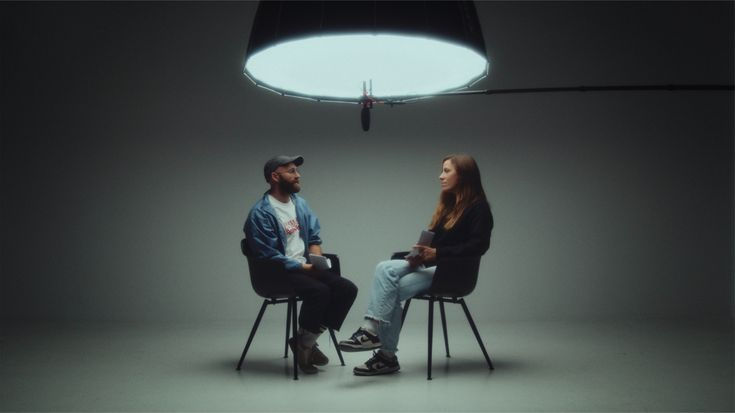

.jpeg)


Initial Ideas Presentation.
I wanna frame it around Dubai and its high pressure work / hustle culture.
I want my core idea to be about breaking free from overworking and reclaiming balance and joy. I want my documentary to have a central question: “Have we forgotten how to live while trying to be successful?”.
This stance is my intention of trying to help people in Dubai and globally so they can see that balance and leisure are not weaknesses but essential for productivity and fulfillment. I also plan on showcasing the cycle of hustle through visual and technical ideas. I feel like the narration, visuals and technical ideas are the essential elements so I can clearly communicate my argument. I will be adding tracking shots of commuters walking through business districts to symbolize routine and also will be adding time-lapse shots of (maybe) office towers day to night. My plan is to introduce contrast editing to my documentary and switch between the serious work energy to the playful joyous moments that I have gathered with my research. I plan to also using the color grading to my advantage and use ambient and rhythmic beats that shifts into a lively beat so my contrast cinematography + editing is more emphasized.